

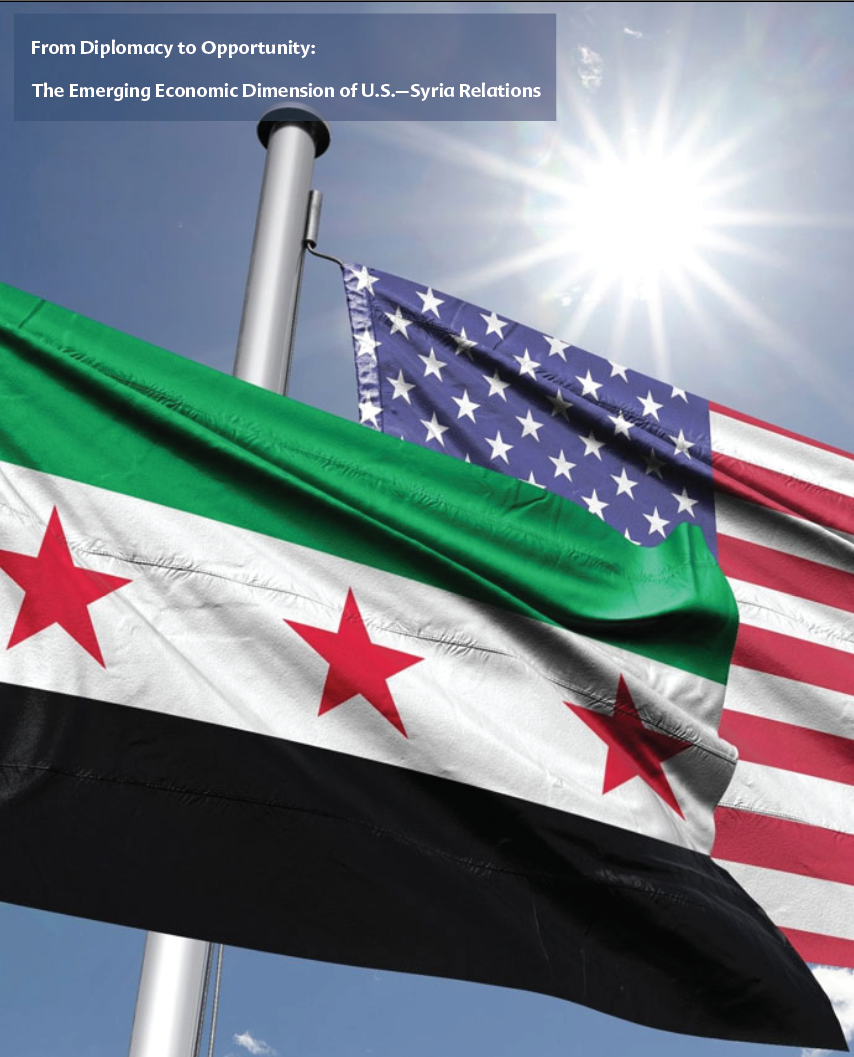
From Diplomacy to Opportunity: The Emerging Economic Dimension of U.S.–Syria Relations
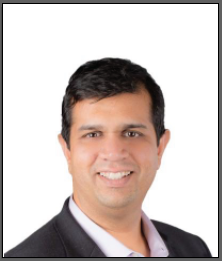
Neal Mody, founder of BioSOV
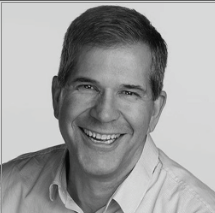
Cliff Monlux, Founder and Managing Partner of Ramp Equity
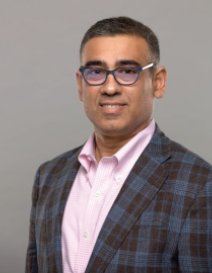
Vikrant Vinayak, Technology Leader and Entrepreneur
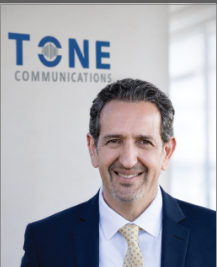
Maher Alanni, Managing Director Tone Communications
TORONTO, ONTARIO, CANADA, July 21, 2026 /EINPresswire.com/ -- For more than a decade, Syria’s relationship with the United States has largely been defined by conflict, humanitarian assistance, sanctions, and regional security. Economic cooperation rarely entered the conversation, and private investment remained largely absent from discussions about Syria’s future.
Today, that conversation is beginning to change.
Recent diplomatic developments between Washington and Damascus, together with renewed international engagement and changes in the broader policy environment, have created an environment in which business leaders, investors, and technology companies are beginning to evaluate Syria from a different perspective.
While political and economic challenges remain, there is growing recognition that diplomacy can become more than a political achievement—it can become the foundation for economic recovery, innovation, and long-term international partnerships.
History has repeatedly demonstrated that successful diplomacy is measured not only by agreements between governments but also by the confidence it creates. Confidence encourages private enterprise. Private enterprise attracts investment. Investment creates employment, transfers knowledge, strengthens institutions, and contributes to sustainable economic growth.
In today’s interconnected world, foreign policy is no longer measured solely by diplomatic success. It is increasingly measured by its ability to create economic opportunity. This principle may ultimately define the next chapter in U.S.–Syria relations.
Syria’s Opportunity to Build for the Future
Rather than viewing Syria exclusively through the lens of post-conflict reconstruction, a growing number of international observers are beginning to recognize another reality: Syria has an opportunity to build an economy designed for the future.
Countries emerging from major challenges often face a critical choice: whether to restore previous systems or create new ones that take advantage of modern technology and innovation.
Syria has the opportunity to adopt next-generation solutions from the outset. Artificial intelligence, biotechnology, digital healthcare, renewable energy, smart agriculture, advanced manufacturing, logistics, and digital infrastructure can become building blocks for a more modern and competitive economy.
Unlike countries constrained by decades-old infrastructure and legacy systems, Syria can adopt new technologies without being limited by previous models.
This changing perspective is beginning to attract attention from international business leaders. Although many discussions remain private and are still at an early stage, a growing number of American entrepreneurs, investors, and technology executives have started evaluating Syria’s long-term potential.
Their interest extends beyond traditional reconstruction projects. Increasingly, they see opportunities to introduce advanced technologies, create strategic partnerships, transfer knowledge, and participate in building new industries.
The Growing Interest of American Technology Companies
One example of this emerging interest is BioSOV, a U.S.-based biotechnology company focused on advancing healthcare through artificial intelligence, biotechnology, and innovative healthcare solutions.
As the company evaluates opportunities across the Middle East, it recognizes Syria as a market with unique long-term potential—not only because of its reconstruction needs but also because of the opportunity to help develop modern healthcare, life sciences, and technology-driven capabilities.
The company’s perspective reflects a broader shift among technology-focused organizations that increasingly see emerging markets as opportunities to build innovative systems from the ground up.
Neal Mody, founder of BioSOV, believes countries entering a new phase of development have a unique advantage because they do not have to repeat outdated models.
According to Mody:
“Countries rebuilding do not have to inherit anyone else’s mistakes. They can put diagnostics, procurement, and local manufacturing in place the right way from day one. That is a real advantage, and it is a narrow one. It lasts about as long as it takes for the first bad decisions to get locked in.”
His perspective highlights an important reality: opportunities created during periods of transformation require strategic decisions, strong institutions, and long-term planning. The ability to adopt modern systems is valuable, but only if supported by effective governance, transparency, and responsible implementation.
Innovation Requires Strong Ecosystems
Successful investment is not created through capital alone. Modern economies are built through ecosystems that connect investors, entrepreneurs, universities, governments, and skilled professionals.
Technology Leader and Entrepreneur Vikrant Vinayak believes sustainable investment depends on creating environments where international expertise works together with local talent.
According to Vinayak:
“The strongest economies are built when international expertise works together with local talent. Sustainable investment is not simply about deploying capital. It is about creating ecosystems that encourage innovation, entrepreneurship, knowledge transfer, and long-term collaboration between governments, universities, private enterprise, and investors.”
This approach is particularly relevant as Syria considers how to attract responsible international investment. The strongest investment models are not based only on financial transactions. They are based on partnerships that create local capabilities, develop human capital, and generate long-term economic value.
Building the Right Investment Environment
Innovation alone is not enough to attract sustainable investment. International investors also evaluate governance, regulatory certainty, transparency, access to talent, and the long-term vision of a country’s leadership. Capital follows confidence, and confidence is built through stable institutions and an environment where businesses can grow responsibly.
Cliff Monlux, Founder, Managing Partner at Ramp Equity Partners, believes that the most successful emerging markets are those that create the conditions for innovation and entrepreneurship to thrive.
According to Monlux:
“The most successful emerging markets are those that create an environment where entrepreneurs can innovate, investors can build with confidence, and local talent has the opportunity to grow alongside international partners. Sustainable investment is driven by trust, strong institutions, and a long-term commitment to innovation. Countries that build those foundations are the ones that attract not only capital, but lasting economic value.”
This perspective reinforces an important principle: long-term investment is not measured only by the amount of capital entering a country but by the quality of the ecosystem it helps create.
The Global Experience of Syrians: A Foundation for Economic Transformation
One of Syria's greatest long-term strategic advantages lies in the global experience that millions of Syrians have accumulated over the past decades.
Across North America, Europe, the Gulf region, and many other parts of the world, Syrians have established themselves as successful entrepreneurs, executives, physicians, scientists, engineers, academics, technology specialists, investors, and business leaders. Through their careers, they have gained international expertise, adopted global best practices, built professional networks, and contributed to some of the world's most advanced industries and institutions.
This wealth of experience represents far more than financial investment. It embodies knowledge, innovation, leadership, advanced technical capabilities, international partnerships, and a deep understanding of global markets. These are strategic assets that can help accelerate Syria's economic transformation and support the development of competitive industries capable of meeting international standards.
As Syria enters a new phase of reconstruction and economic reform, the global experience of Syrians can serve as a powerful catalyst for national development. By encouraging collaboration between experienced Syrian professionals abroad and institutions within the country, Syria has an opportunity to accelerate technology transfer, strengthen institutional capacity, attract strategic investment, foster innovation, and build sustainable partnerships with international markets.
The successful transformation of many emerging economies has demonstrated that people are among a nation's most valuable assets. For Syria, the knowledge, expertise, and international perspective gained by Syrians around the world represent an extraordinary resource that can contribute significantly to building a more diversified, resilient, and globally competitive economy for future generations.
Investment Begins with Confidence
For international investors, opportunity alone is not enough. Investors also seek transparency, regulatory certainty, institutional stability, and a predictable business environment. The countries that successfully attract long-term investment are those that create confidence. Successful diplomacy creates confidence. Confidence creates partnerships. Partnerships attract investment. Investment drives sustainable development.
This connection between foreign relations and economic growth is becoming increasingly important as Syria enters a new phase of international engagement.
Maher Alanni, Managing Director of Tone Communications, believes diplomacy, communications, and economic development are increasingly interconnected.
According to Alanni:
“Successful diplomacy is ultimately measured by the confidence it creates. Confidence attracts investors. Investors transfer technology, create employment, strengthen institutions, and build lasting partnerships. Syria today has an opportunity not simply to rebuild what was lost, but to position itself as a modern, innovative economy connected to international markets. The renewed interest from American business leaders reflects the beginning of a new chapter built on mutual opportunity, shared prosperity, and responsible international cooperation.”
Looking Ahead
The road ahead will not be without challenges. Meaningful reforms, transparent governance, regulatory improvements, and continued international engagement will all influence the pace at which investment develops.
However, the conversation surrounding Syria is beginning to evolve. Increasingly, Syria is being discussed not only in terms of reconstruction but also in terms of innovation, entrepreneurship, technology, and economic opportunity. That shift in perception may become one of the country’s most valuable assets. If supported by responsible reforms, strategic partnerships, and international cooperation, Syria has an opportunity to redefine its role in the global economy.
The next chapter in U.S.–Syria relations should therefore not be measured only by diplomatic achievements. It should also be measured by the quality of partnerships created, the innovation introduced, the opportunities generated, and the confidence restored between nations.
History may ultimately remember this period not simply as the moment diplomatic barriers began to decline, but as the moment Syria began repositioning itself as an emerging destination for innovation, investment, and international cooperation.
Tone Communications Team
Tone Communications
+1 647-341-5000
info@tonecommunications.ca
Visit us on social media:
LinkedIn
Legal Disclaimer:
EIN Presswire provides this news content "as is" without warranty of any kind. We do not accept any responsibility or liability for the accuracy, content, images, videos, licenses, completeness, legality, or reliability of the information contained in this article. If you have any complaints or copyright issues related to this article, kindly contact the author above.
