
Alona Lebedieva: Europe Is Looking for New Industrial Partners, Not Just Cheaper Suppliers
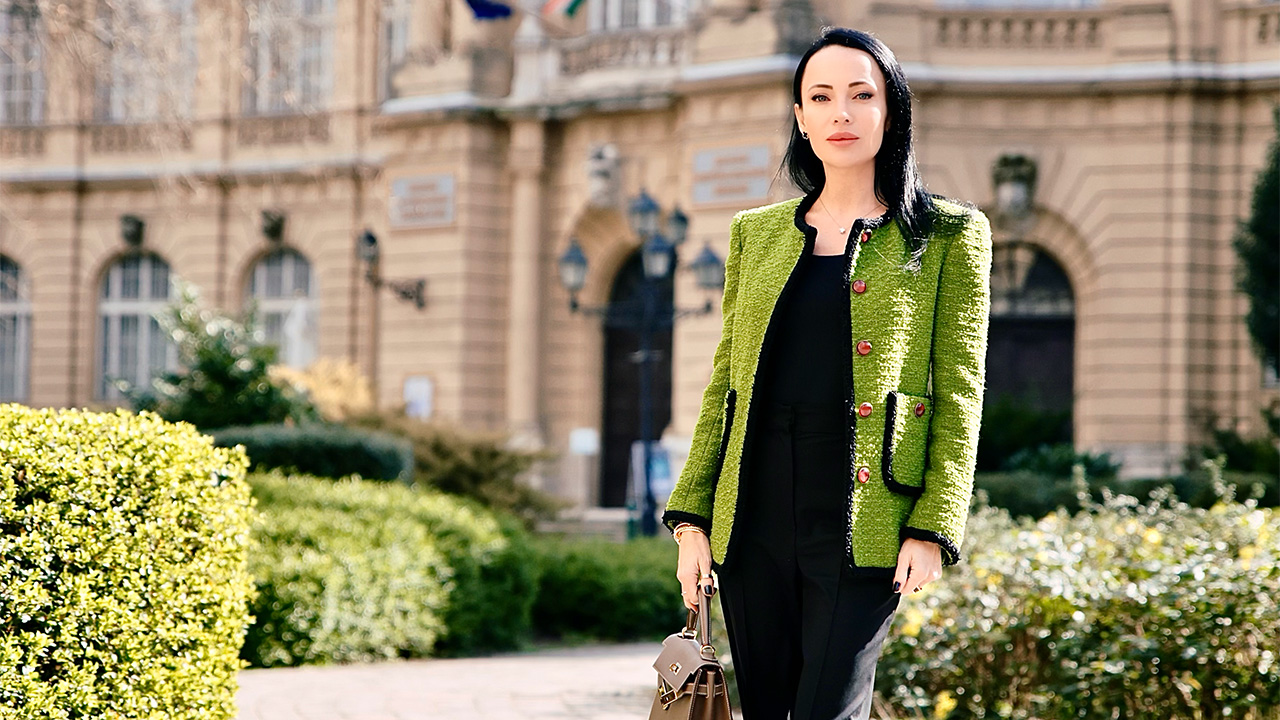
Alona Lebedieva
On June 5, Reuters reported that the European Commission is considering new rules for sensitive sectors. The idea is to ensure that companies do not depend on a single source of critical supplies and have at least three different suppliers. Particular attention is being paid to risks related to China’s restrictions on exports of rare earth elements and other important materials. Importantly, this is not yet an adopted decision, but rather a direction the European Commission is working on as part of a broader review of trade defense instruments.
This clearly reflects a shift in sentiment within the EU. In the past, businesses often chose suppliers based on price, scale, and speed. Now, other questions are becoming increasingly important: whether a supplier can be replaced, whether one country controls a critical element of production, and whether raw materials or components can become an instrument of political pressure.
The EU has already embedded similar logic in the Critical Raw Materials Act. By 2030, Europe wants to extract at least 10% of its strategic raw materials within the EU, process at least 40%, obtain 25% from recycling, and avoid depending on any single third country for more than 65% at any important stage of the supply chain.
For Kazakhstan and Uzbekistan, this opens up opportunities. But it does not mean that Europe will automatically replace China with Central Asia. European businesses do not simply need new countries on the map. They need partners that can guarantee stability, quality, logistics, clear origin of raw materials, processing capacity, and predictable rules.
According to Alona Lebedieva, owner of the Ukrainian diversified industrial and investment group Aurum Group, for Central Asia this is not only a matter of resource exports, but also a test of its ability to become part of more complex production chains. Kazakhstan has a strong position in this context thanks to its resource base, critical materials, energy sector, and geography. But the real value for Europe will not lie only in access to raw materials. It will depend on whether Kazakhstan can develop processing, infrastructure, an energy base, and longer production chains. This is especially relevant given that EU-Kazakhstan cooperation in this area already has a practical framework — a strategic partnership on raw materials, batteries, and renewable hydrogen, as well as a roadmap for 2025–2026.
Uzbekistan has a different advantage — industrial potential, population, a domestic market, and a course toward simplifying rules for business. If the country can combine public service reforms, investment in energy, industrial parks, and clear conditions for investors, it may become not only a sales market, but also a production platform for the region. It is also important that the EU and Uzbekistan have already signed a memorandum on a strategic partnership in the field of sustainable raw materials value chains, which means that Europe’s interest in the country is not merely theoretical.
For Central Asia, this is an important moment. The region can remain a supplier of raw materials, or it can move higher up the value chain. The second path is more difficult because it requires capital, technology, management, talent, and trust. But it is precisely this path that gives the countries of the region greater economic agency.
Europe is not simply looking for a cheaper replacement for China. It is looking for a way to make its industrial chains less vulnerable. For Kazakhstan and Uzbekistan, this is a chance, but it will require not only resources, but also a readiness to operate according to the rules of a major industrial market.
In Alona Lebedieva’s view, the main question for Central Asia now is not whether Europe will become interested in the region. That interest already exists, and it is gradually moving into the format of roadmaps, partnerships, and investment projects. The question is whether the countries of the region will be able to offer the EU not only raw materials, but full-fledged industrial cooperation — with processing, logistics, stable energy, and clear conditions for business.
Alona Lebedieva
Aurum Group
email us here
Legal Disclaimer:
EIN Presswire provides this news content "as is" without warranty of any kind. We do not accept any responsibility or liability for the accuracy, content, images, videos, licenses, completeness, legality, or reliability of the information contained in this article. If you have any complaints or copyright issues related to this article, kindly contact the author above.
