

Fresh business and economy news from Europe
Provided by AGP
Nitrocellulose Production Plant Setup, Feasibility Study, ROI Analysis and Business Plan Consultant
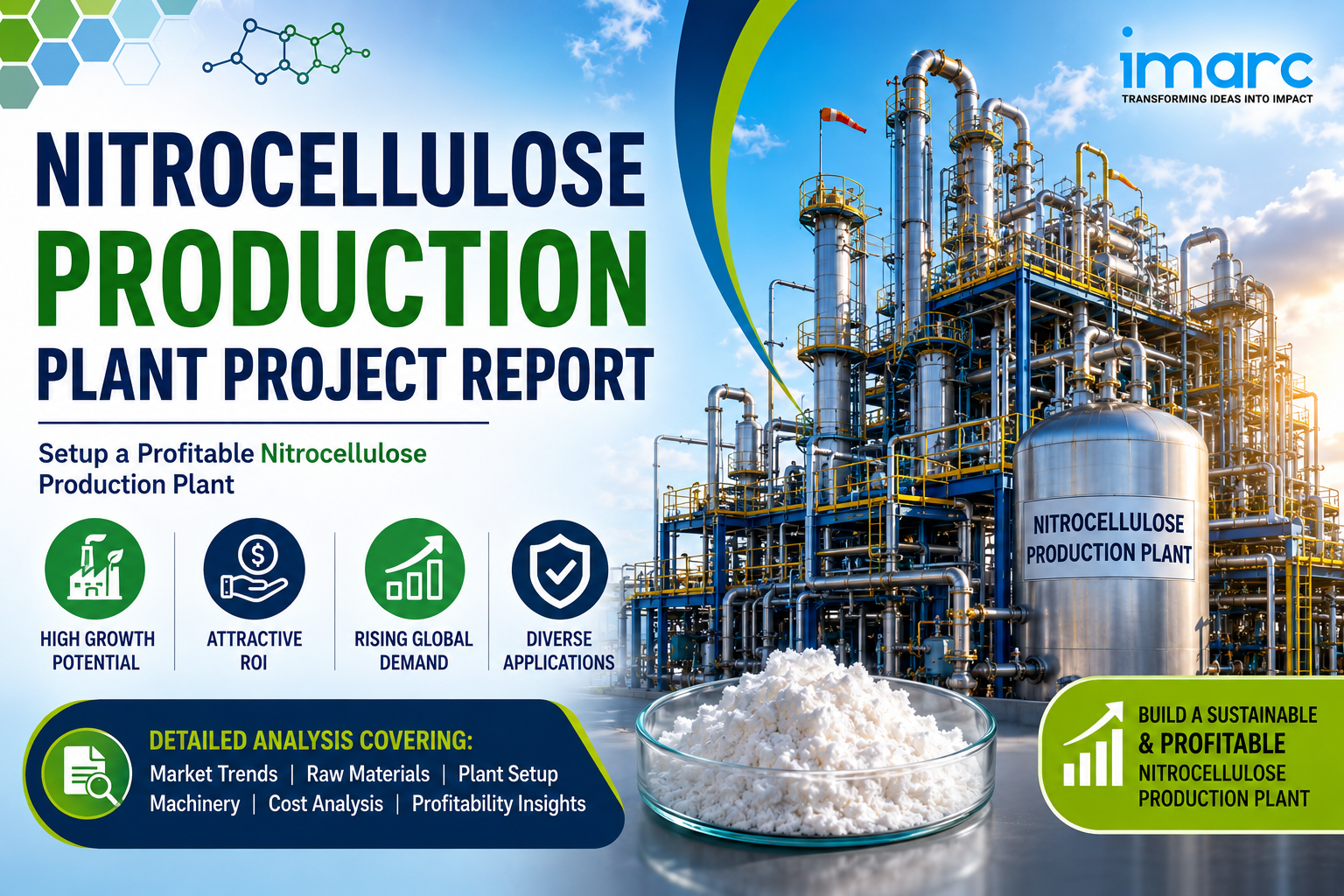
A Detailed DPR Covering CapEx, OpEx, Production Process, ROI Analysis, and Multi-Sector Demand Across Automotive, Coatings, Printing Inks, Cosmetics and Defense
BROOKLYN, NY, UNITED STATES, May 19, 2026 /EINPresswire.com/ -- Setting up a nitrocellulose production plant gives you access to one of the most stable margin profiles in specialty chemicals. The product serves five industries simultaneously — automotive lacquers, furniture coatings, printing inks, nail polish, and military propellants — each with its own demand cycle. When one slows, others hold. Add gross margins of 35–45% and a limited global supplier base, and you have a business that is consistently profitable and difficult to disrupt.IMARC Group's Nitrocellulose Production Cost Analysis Report is a full-scale DPR and nitrocellulose feasibility study for investors, project developers, and entrepreneurs who need production-ready detail — not a market overview. It covers raw material sourcing, complete process design, CapEx and OpEx modelling, 10-year financial projections, and a regulatory compliance framework applicable across major producing geographies.
𝐑𝐞𝐪𝐮𝐞𝐬𝐭 𝐟𝐨𝐫 𝐚 𝐒𝐚𝐦𝐩𝐥𝐞 𝐑𝐞𝐩𝐨𝐫𝐭: https://www.imarcgroup.com/nitrocellulose-manufacturing-plant-project-report/requestsample
𝐍𝐢𝐭𝐫𝐨𝐜𝐞𝐥𝐥𝐮𝐥𝐨𝐬𝐞: 𝐏𝐫𝐨𝐝𝐮𝐜𝐭 𝐎𝐯𝐞𝐫𝐯𝐢𝐞𝐰 𝐚𝐧𝐝 𝐂𝐨𝐦𝐦𝐞𝐫𝐜𝐢𝐚𝐥 𝐏𝐫𝐨𝐩𝐞𝐫𝐭𝐢𝐞𝐬
Nitrocellulose, also known as cellulose nitrate, is produced in a cellulose nitrate production plant by treating cellulose — sourced from cotton linters or wood pulp — with a controlled mixture of nitric acid and sulfuric acid. The reaction yields a film-forming polymer that dries rapidly, bonds strongly to most surfaces, and produces a hard, glossy finish that synthetic alternatives have not been able to replace at a comparable cost point.
The nitrogen content of the final product determines its commercial grade and application:
• 7–12.2% nitrogen: lacquer and coating grade — used in automotive refinish, wood and furniture coatings, printing inks, and nail polish formulations
• 6–13.3% nitrogen: industrial and explosive grade — used in ammunition propellants, pyrotechnics, and defense applications
𝐑𝐞𝐜𝐞𝐧𝐭 𝐈𝐧𝐝𝐮𝐬𝐭𝐫𝐲 𝐄𝐱𝐩𝐚𝐧𝐬𝐢𝐨𝐧 𝐚𝐧𝐝 𝐈𝐧𝐯𝐞𝐬𝐭𝐦𝐞𝐧𝐭 𝐀𝐜𝐭𝐢𝐯𝐢𝐭𝐲
Three significant capacity moves in the past 12 months confirm that the global nitrocellulose sector is in an active investment phase — not a contraction:
• May 2025: Nitrex Chemicals India announced a 30% expansion of its nitrocellulose plant, citing rising demand from South Asian automotive and printing ink industries. This confirms that regional supply has not kept pace with consumption growth
• April 2025: Nitro Química expanded production at its Brazilian facility to address growing demand in coatings, inks, and specialty lacquer markets globally
• October 2024: MSM Group (Slovak subsidiary of CSG Industrial Group) acquired IFF's nitrocellulose business including its plant in Walsrode Industrial Park, Germany — a strategic consolidation of European supply capacity
Capacity expansions by existing producers and acquisitions of established plants both signal the same thing: demand is outpacing available supply in multiple regions. For new entrants targeting geographies where local supply is thin — Southeast Asia, the Middle East, Latin America, or parts of Europe — that gap is the commercial opportunity.
𝐄𝐧𝐝-𝐔𝐬𝐞 𝐀𝐩𝐩𝐥𝐢𝐜𝐚𝐭𝐢𝐨𝐧𝐬 𝐚𝐧𝐝 𝐃𝐞𝐦𝐚𝐧𝐝 𝐃𝐫𝐢𝐯𝐞𝐫𝐬
Nitrocellulose serves five distinct industries, each with its own growth dynamic:
𝐀𝐮𝐭𝐨𝐦𝐨𝐭𝐢𝐯𝐞 𝐜𝐨𝐚𝐭𝐢𝐧𝐠𝐬: NC lacquer manufacturing plant output serves automotive refinish for fast-drying, high-gloss applications. Global car production and aftermarket refinishing sustain consistent demand. Automotive lacquer manufacturing cost competitiveness versus waterborne alternatives keeps NC the preferred choice across major economies — the US, Germany, China, South Korea, and Brazil.
𝐖𝐨𝐨𝐝 𝐚𝐧𝐝 𝐟𝐮𝐫𝐧𝐢𝐭𝐮𝐫𝐞 𝐜𝐨𝐚𝐭𝐢𝐧𝐠𝐬: A nitrocellulose coating plant serving the furniture sector supplies NC lacquers for premium surface finishes. Vietnam, Poland, Italy, India, and China are among the largest furniture-producing nations, and all use nitrocellulose-based coatings extensively. Growing middle-class consumption and real estate activity across Asia and Eastern Europe are sustaining demand growth in this segment.
𝐏𝐫𝐢𝐧𝐭𝐢𝐧𝐠 𝐢𝐧𝐤𝐬: Nitrocellulose inks production is one of the fastest-growing applications, serving gravure and flexographic printing on flexible packaging substrates such as snack bags, pharmaceutical blister packs, and retail packaging. E-commerce-driven packaging growth across the Americas, Europe, and Asia is directly adding to NC ink volumes.
𝐂𝐨𝐬𝐦𝐞𝐭𝐢𝐜𝐬 𝐚𝐧𝐝 𝐩𝐞𝐫𝐬𝐨𝐧𝐚𝐥 𝐜𝐚𝐫𝐞: Cosmetic-grade nitrocellulose is the primary film-forming agent in nail polish. The global nail care market is valued at over USD 15 billion and growing at 5–7% annually. Premium and gel-formula nail products use higher-grade NC, which commands better pricing and margin.
𝐃𝐞𝐟𝐞𝐧𝐬𝐞 𝐚𝐧𝐝 𝐩𝐫𝐨𝐩𝐞𝐥𝐥𝐚𝐧𝐭𝐬: An explosive grade nitrocellulose plant serves defense and military industries with high-nitrogen formulations for ammunition, explosives, and propellants. Defense budgets in the US, Europe, China, India, and Southeast Asia are all increasing. This sector provides a parallel revenue stream that is less price-sensitive and more volume-stable than commercial applications.
𝐍𝐢𝐭𝐫𝐨𝐜𝐞𝐥𝐥𝐮𝐥𝐨𝐬𝐞 𝐏𝐫𝐨𝐝𝐮𝐜𝐭𝐢𝐨𝐧 𝐏𝐥𝐚𝐧𝐭 𝐅𝐞𝐚𝐬𝐢𝐛𝐢𝐥𝐢𝐭𝐲 𝐑𝐞𝐩𝐨𝐫𝐭: https://www.imarcgroup.com/nitrocellulose-manufacturing-plant-project-report
𝐇𝐨𝐰 𝐚 𝐍𝐢𝐭𝐫𝐨𝐜𝐞𝐥𝐥𝐮𝐥𝐨𝐬𝐞 𝐏𝐥𝐚𝐧𝐭 𝐖𝐨𝐫𝐤𝐬 — 𝐓𝐡𝐞 𝐏𝐫𝐨𝐝𝐮𝐜𝐭𝐢𝐨𝐧 𝐏𝐫𝐨𝐜𝐞𝐬𝐬
A nitrocellulose manufacturing plant follows a multi-step chemical process that requires strict quality control and safety management at every stage:
• Raw material preparation: Cotton linters or wood pulp are selected based on the target product grade. A cotton linters nitrocellulose plant produces higher-purity NC with better film properties, preferred for lacquer and cosmetic grades. Wood pulp suits cost-sensitive industrial grades
• Nitration: Cellulose is reacted with a mixed acid — typically 25–30% nitric acid and 55–60% sulfuric acid — at controlled temperatures and residence times. The nitrogen content of the product is determined at this stage. This is the most technically sensitive and safety-critical step in the process
• Washing and neutralisation: Residual acids are removed through multiple water wash cycles, followed by alkaline neutralisation. Incomplete acid removal produces an unstable product — this step requires careful process control and cannot be accelerated without quality risk
• Stabilisation: Stabilisers such as diphenylamine or centralite are added to prevent thermal degradation and extend shelf life. This is especially critical for explosive-grade production where storage stability directly affects safety
• Drying: Wet NC is dried under controlled humidity conditions. Because dry nitrocellulose is flammable, it is typically stored and transported in alcohol-dampened form unless it is being packaged for immediate use
• Grinding and grading: Final product is ground to the required particle size and graded by nitrogen content, viscosity, and solubility profile for dispatch to the appropriate end-use application
• Packaging: Coating and cosmetic grades are packed in moisture-proof containers. Explosive-grade NC requires hazardous materials packaging and transport licensing under applicable regulations in each jurisdiction
𝐍𝐢𝐭𝐫𝐨𝐜𝐞𝐥𝐥𝐮𝐥𝐨𝐬𝐞 𝐏𝐥𝐚𝐧𝐭 𝐂𝐚𝐩𝐄𝐱 𝐚𝐧𝐝 𝐈𝐧𝐯𝐞𝐬𝐭𝐦𝐞𝐧𝐭 𝐄𝐜𝐨𝐧𝐨𝐦𝐢𝐜𝐬
𝐏𝐫𝐨𝐝𝐮𝐜𝐭𝐢𝐨𝐧 𝐂𝐚𝐩𝐚𝐜𝐢𝐭𝐲:
• Standard commercial-scale range: 10,000 – 20,000 MT per annum
• Modular design allows phased entry at lower capacity with planned expansion as market offtake builds
𝐏𝐫𝐨𝐟𝐢𝐭𝐚𝐛𝐢𝐥𝐢𝐭𝐲 𝐁𝐞𝐧𝐜𝐡𝐦𝐚𝐫𝐤𝐬:
• Gross profit margin: 35–45% — nitrocellulose plant ROI benchmark that is higher than most bulk and specialty chemical categories
• Net profit margin: 15–20% after financing costs, depreciation, and taxes
• Higher margins reflect technical production barriers, limited qualified supplier base globally, and stable multi-sector demand
𝐎𝐩𝐞𝐫𝐚𝐭𝐢𝐧𝐠 𝐂𝐨𝐬𝐭 (𝐎𝐩𝐄𝐱) 𝐁𝐫𝐞𝐚𝐤𝐝𝐨𝐰𝐧:
• Raw materials (cotton linters or wood pulp, nitric acid, sulfuric acid): 60–70% of total OpEx
• Utilities (power, water, steam for drying): 15–20% of OpEx — higher than average due to energy-intensive drying and acid recovery systems
• Safety systems, stabilisation chemicals, and compliance costs: a fixed overhead that new entrants sometimes underestimate in project planning
𝐂𝐚𝐩𝐢𝐭𝐚𝐥 𝐈𝐧𝐯𝐞𝐬𝐭𝐦𝐞𝐧𝐭 (𝐂𝐚𝐩𝐄𝐱) 𝐂𝐨𝐦𝐩𝐨𝐧𝐞𝐧𝐭𝐬:
• Land and site development meeting hazard zone setback requirements
• Civil construction: separated process bays for safety isolation, acid storage facilities, washing systems, controlled drying chambers
• Core process equipment: nitration vessels, acid mixing and recovery systems, centrifuges, wash tanks, stabilisation units, dryers, grinding mills
• Safety infrastructure: explosion venting, fire suppression systems, remote process monitoring, personal protective equipment systems
• Utilities: boiler, effluent treatment plant, acid recovery unit, cooling water circuit
• Pre-operative expenses, regulatory licensing fees, and initial working capital
𝐀𝐬𝐤 𝐀𝐧𝐚𝐥𝐲𝐬𝐭 𝐟𝐨𝐫 𝐂𝐮𝐬𝐭𝐨𝐦𝐢𝐳𝐚𝐭𝐢𝐨𝐧: https://www.imarcgroup.com/request?type=report&id=18210&flag=C
𝐆𝐥𝐨𝐛𝐚𝐥 𝐌𝐚𝐫𝐤𝐞𝐭 𝐚𝐧𝐝 𝐑𝐞𝐠𝐢𝐨𝐧𝐚𝐥 𝐃𝐞𝐦𝐚𝐧𝐝
The global nitrocellulose market, valued at USD 946 million, is projected to reach USD 1,379 million at a CAGR of 4.3%. Asia Pacific accounts for approximately 46% of global consumption, driven by automotive coatings, furniture finishing, packaging inks, and industrial applications across China, Southeast Asia, and South Asia.
𝐈𝐧𝐝𝐢𝐚: India produces approximately 25% of the world's cotton — making it naturally positioned for cotton linters-based NC production. The domestic automotive refinish, furniture, and printing ink sectors are all growing at double-digit rates, and current supply is insufficient to meet demand. India's defense procurement expansion adds an explosive-grade demand stream. For new entrants, India offers a strong raw material base, established chemical manufacturing infrastructure, and a ready export channel to Southeast Asia and the Middle East.
𝐂𝐡𝐢𝐧𝐚: The world's largest consumer and producer of nitrocellulose. However, tightening environmental and safety regulations on domestic chemical plants are pushing multinational buyers to diversify their supply base toward Southeast Asian and South Asian producers — creating an export opportunity for new entrants in these regions.
𝐔𝐧𝐢𝐭𝐞𝐝 𝐒𝐭𝐚𝐭𝐞𝐬: A USD 133 million market with stable demand from automotive aftermarket refinishing, packaging inks, and cosmetics. The US EPA's low-VOC regulations are creating demand for reformulated NC grades compatible with bio-based solvents — an emerging premium product category.
𝐄𝐮𝐫𝐨𝐩𝐞: Steady industrial demand from automotive, furniture, and defense sectors. The acquisition of IFF's German nitrocellulose plant in 2024 signals strategic consolidation of supply, which could tighten availability for buyers and strengthen pricing for producers.
𝐒𝐨𝐮𝐭𝐡𝐞𝐚𝐬𝐭 𝐀𝐬𝐢𝐚 𝐚𝐧𝐝 𝐌𝐢𝐝𝐝𝐥𝐞 𝐄𝐚𝐬𝐭: Fast-growing import-dependent markets with limited domestic production. Vietnam, Thailand, Indonesia, the UAE, and Saudi Arabia all import nitrocellulose for furniture, automotive, and packaging applications. These regions represent natural export targets for any new capacity built in South Asia or Eastern Europe.
𝐋𝐚𝐭𝐢𝐧 𝐀𝐦𝐞𝐫𝐢𝐜𝐚: Brazil has active domestic production through Nitro Química, but the rest of the continent — Mexico, Argentina, Colombia — relies on imports. The automotive and furniture sectors in these markets are growing, and local supply has not kept pace.
𝐒𝐢𝐭𝐞 𝐒𝐞𝐥𝐞𝐜𝐭𝐢𝐨𝐧 𝐚𝐧𝐝 𝐑𝐞𝐠𝐮𝐥𝐚𝐭𝐨𝐫𝐲 𝐂𝐨𝐧𝐬𝐢𝐝𝐞𝐫𝐚𝐭𝐢𝐨𝐧𝐬
Any nitrocellulose manufacturing plant setup must account for flammable and explosive intermediates from day one. Site selection, plant layout, and regulatory clearances carry more weight here than in most chemical plant categories:
• Explosion hazard zoning: The plant must meet minimum exclusion distance requirements from residential areas, public roads, and other industrial facilities. Regulatory frameworks vary by country — PESO in India, ATEX in Europe, OSHA standards in the US — but the core principle of physical separation is consistent globally
• Raw material sourcing: Cotton linters sourcing varies by geography. Major producing countries include the US, India, Pakistan, Uzbekistan, and Brazil. Wood pulp is more globally available but produces lower-quality NC. Proximity to nitric acid and sulfuric acid suppliers reduces hazardous material transport risk and cost
• Water and utilities: Washing and neutralisation are water-intensive. Reliable water supply at the required volume is a baseline site requirement
• Emergency response: Local fire services capability, hospital proximity, and emergency response protocols are part of the site approval process in most jurisdictions
• Government incentives: Special Economic Zones and chemical industry parks in countries including India, China, Germany, and Saudi Arabia offer faster regulatory clearances and infrastructure support for specialty chemical plants
𝐑𝐞𝐩𝐨𝐫𝐭 𝐂𝐨𝐯𝐞𝐫𝐚𝐠𝐞
IMARC Group's Nitrocellulose Plant Project Report serves as a complete nitrocellulose business plan and technical reference for investment decisions, bank loan applications, and pre-project engineering planning:
• Complete process flow with mass balance and raw material requirement calculations
• CapEx breakdown by component: equipment, civil construction, safety systems, utilities, pre-operative costs
• 10-year OpEx projections: raw materials, utilities, manpower, maintenance, compliance costs
• Financial model: IRR, NPV, DSCR, break-even analysis, and sensitivity tables
• Machinery specifications with sourcing options across multiple geographies
• Regulatory compliance framework covering key producing countries
• Cost benchmarking across cotton linters and wood pulp feedstock routes
• Product grade strategy: coating-grade vs explosive-grade market positioning
The report is relevant for specialty chemical investors, ink and coatings manufacturers evaluating backward integration, defense procurement consultants, private equity funds assessing chemical sector opportunities, and financial institutions requiring a bankable feasibility study for project financing — across any geography.
𝐁𝐫𝐨𝐰𝐬𝐞 𝐌𝐨𝐫𝐞 𝐅𝐞𝐚𝐬𝐢𝐛𝐢𝐥𝐢𝐭𝐲 𝐒𝐭𝐮𝐝𝐲 𝐚𝐧𝐝 𝐁𝐮𝐬𝐢𝐧𝐞𝐬𝐬 𝐏𝐥𝐚𝐧 𝐑𝐞𝐩𝐨𝐫𝐭𝐬 𝐛𝐲 𝐈𝐌𝐀𝐑𝐂 𝐆𝐫𝐨𝐮𝐩:
• 𝗛𝗗𝗣𝗘 𝗣𝗶𝗽𝗲 𝗠𝗮𝗻𝘂𝗳𝗮𝗰𝘁𝘂𝗿𝗶𝗻𝗴 𝗣𝗹𝗮𝗻𝘁 𝗣𝗿𝗼𝗷𝗲𝗰𝘁 𝗥𝗲𝗽𝗼𝗿𝘁: https://www.imarcgroup.com/hdpe-pipe-manufacturing-plant-project-report
• 𝗜𝗰𝗲 𝗠𝗮𝗻𝘂𝗳𝗮𝗰𝘁𝘂𝗿𝗶𝗻𝗴 𝗣𝗹𝗮𝗻𝘁 𝗣𝗿𝗼𝗷𝗲𝗰𝘁 𝗥𝗲𝗽𝗼𝗿𝘁: https://www.imarcgroup.com/ice-manufacturing-plant-project-report
• 𝗜𝗻𝘀𝘁𝗮𝗻𝘁 𝗖𝗼𝗳𝗳𝗲𝗲 𝗠𝗮𝗻𝘂𝗳𝗮𝗰𝘁𝘂𝗿𝗶𝗻𝗴 𝗣𝗹𝗮𝗻𝘁 𝗣𝗿𝗼𝗷𝗲𝗰𝘁 𝗥𝗲𝗽𝗼𝗿𝘁: https://www.imarcgroup.com/instant-coffee-manufacturing-plant-project-report
• 𝗟𝗮𝗽𝘁𝗼𝗽 𝗠𝗮𝗻𝘂𝗳𝗮𝗰𝘁𝘂𝗿𝗶𝗻𝗴 𝗣𝗹𝗮𝗻𝘁 𝗣𝗿𝗼𝗷𝗲𝗰𝘁 𝗥𝗲𝗽𝗼𝗿𝘁: https://www.imarcgroup.com/laptop-manufacturing-plant-project-report
• 𝗠𝗮𝘀𝘁𝗲𝗿𝗯𝗮𝘁𝗰𝗵 𝗠𝗮𝗻𝘂𝗳𝗮𝗰𝘁𝘂𝗿𝗶𝗻𝗴 𝗣𝗹𝗮𝗻𝘁 𝗣𝗿𝗼𝗷𝗲𝗰𝘁 𝗥𝗲𝗽𝗼𝗿𝘁: https://www.imarcgroup.com/masterbatch-manufacturing-plant-project-report
• 𝗠𝗮𝘁𝘁𝗿𝗲𝘀𝘀 𝗠𝗮𝗻𝘂𝗳𝗮𝗰𝘁𝘂𝗿𝗶𝗻𝗴 𝗣𝗹𝗮𝗻𝘁 𝗣𝗿𝗼𝗷𝗲𝗰𝘁 𝗥𝗲𝗽𝗼𝗿𝘁: https://www.imarcgroup.com/mattress-manufacturing-plant-project-report
• 𝗙𝗹𝗼𝗮𝘁 𝗚𝗹𝗮𝘀𝘀 𝗠𝗮𝗻𝘂𝗳𝗮𝗰𝘁𝘂𝗿𝗶𝗻𝗴 𝗣𝗹𝗮𝗻𝘁 𝗣𝗿𝗼𝗷𝗲𝗰𝘁 𝗥𝗲𝗽𝗼𝗿𝘁: https://www.imarcgroup.com/float-glass-manufacturing-plant-project-report
• 𝗚𝗹𝗮𝘀𝘀 𝗠𝗮𝗻𝘂𝗳𝗮𝗰𝘁𝘂𝗿𝗶𝗻𝗴 𝗣𝗹𝗮𝗻𝘁 𝗣𝗿𝗼𝗷𝗲𝗰𝘁 𝗥𝗲𝗽𝗼𝗿𝘁: https://www.imarcgroup.com/glass-manufacturing-plant-project-report
𝐀𝐛𝐨𝐮𝐭 𝐈𝐌𝐀𝐑𝐂 𝐆𝐫𝐨𝐮𝐩
IMARC Group is a global market research and management consulting firm operating across 200+ industries. Its plant setup and DPR practice works with investors, project developers, government agencies, and banks across more than 50 countries. IMARC's detailed project reports are used for bank loan documentation, investment committee approvals, and pre-project engineering planning.
Elena Anderson
IMARC Services Private Limited
+1 201-971-6302
email us here
Legal Disclaimer:
EIN Presswire provides this news content "as is" without warranty of any kind. We do not accept any responsibility or liability for the accuracy, content, images, videos, licenses, completeness, legality, or reliability of the information contained in this article. If you have any complaints or copyright issues related to this article, kindly contact the author above.
